Digital out-of-home advertising, usually shortened to DOOH, is advertising that runs on internet-connected screens in physical places people already go. Bars, gyms, cafés, delis, neighborhood markets, lobbies, waiting rooms. The screen is connected to a network, which means the content on it can be scheduled, changed, targeted, and reported on the same way a web ad can. That connection is the entire difference between DOOH and a printed poster, and it is the reason the format has changed so quickly.
What does the "digital" in DOOH actually refer to?
Not the screen. A television bolted to a wall playing a looped video file is a digital display, but it is not DOOH. What makes it DOOH is that the screen is addressable: a central system knows what is playing on it, can change that content remotely, and can log what ran and when. That log is what makes the medium accountable. Traditional out-of-home could tell you roughly how many cars passed a billboard. DOOH can tell you a specific creative played on a specific screen at a specific minute.
How is a venue screen different from a billboard?
Dwell time, mostly. A billboard gets a fraction of a second from someone driving past at forty miles an hour, usually at a distance and usually while they are doing something more demanding than looking at advertising. A screen inside a café gets a very different moment: someone standing still, waiting for an order, at eye level, with nothing else competing for their attention. The audience is smaller and the attention is far better. For most brands that trade-off is the right one, because a smaller number of people actually absorbing the message beats a larger number technically having it in frame.
Where do the screens actually go?
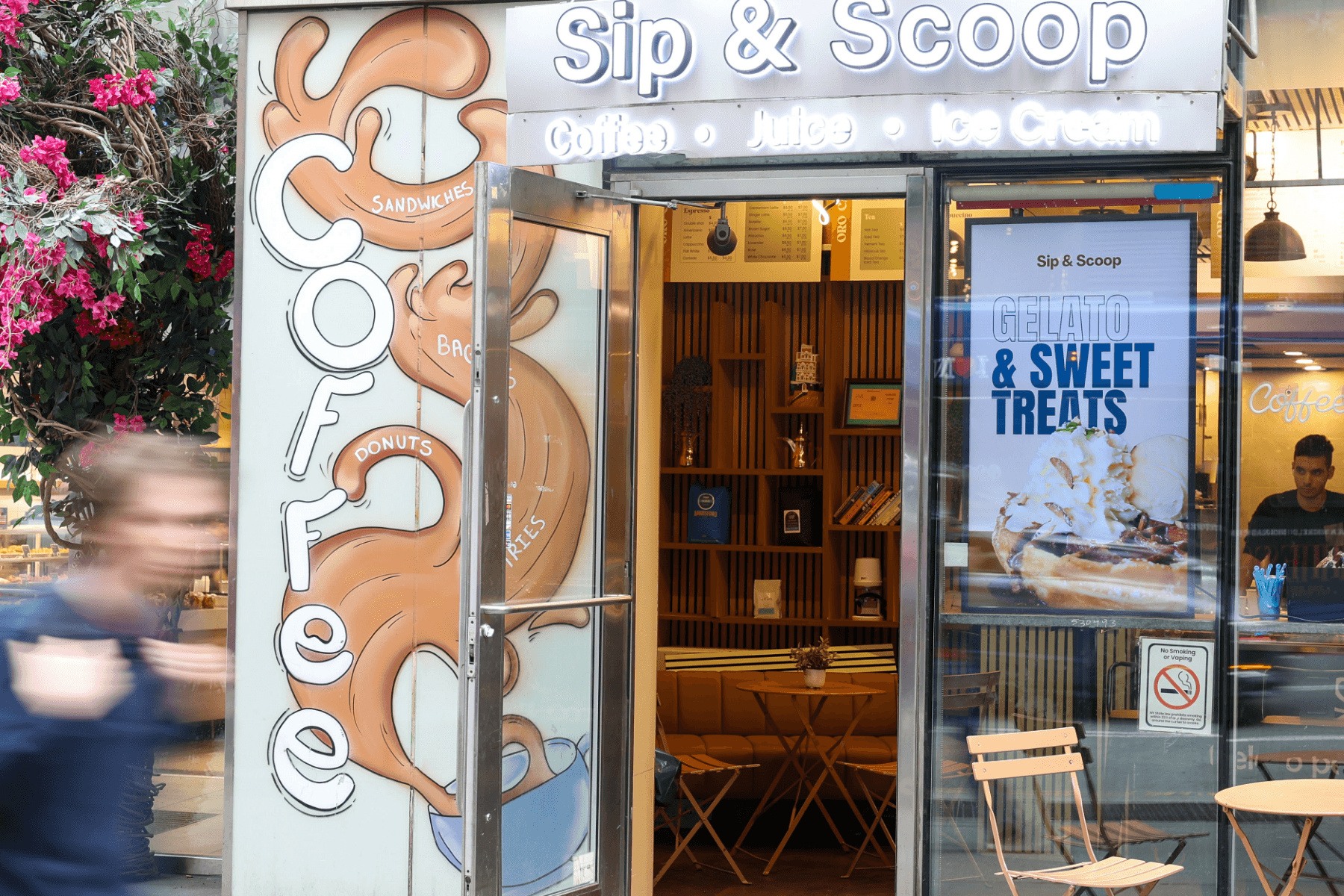
The good ones go where people are already standing still. High-dwell neighborhood venues are the core of it: delis, cafés, gyms, bars, corner markets. These are places with genuine regulars, which means the same person sees a campaign several times a week rather than once. That repetition inside a familiar, trusted environment does something a single roadside impression cannot. It is also why venue quality matters more than raw screen count. A hundred screens in places people actually linger will outperform a thousand in places they hurry through.
How does buying DOOH actually work?
Traditionally it looked like this: contact a media owner, negotiate a package, sign for a fixed four-to-eight week flight, produce creative separately at your own cost, ship it, wait. That process took weeks and it priced out anyone without an agency. The modern version compresses it. You describe the brand and the goal, you get back a plan naming the markets and venue types, creative is produced, and the campaign goes live. The buying friction that kept out-of-home a big-brand medium was never really about the screens. It was about the process around them.
What does the creative cost?
Historically this was the part that quietly killed campaigns for smaller advertisers. Media might be affordable, but producing a finished, motion-designed ad built for a specific screen format was not, and it often cost more than the media itself. That is the specific barrier the Prism platform exists to remove: creative is generated for the network at no cost to the advertiser, tuned to the venues and the format, with revisions included. Removing production cost does not just make campaigns cheaper. It changes who can run one at all.
How fast can a campaign go live?
Under 72 hours from brief, on our network. That number is worth sitting with, because the traditional out-of-home timeline is measured in weeks and the print equivalent in months. A short turnaround is not just convenience. It means out-of-home can respond to something: a launch, a local event, a seasonal window, a competitor move. A medium that takes six weeks to activate can only ever carry evergreen brand messaging. A medium that takes three days can carry an actual campaign.
Is DOOH only worth it for national brands?
It used to be, and the reason was structural rather than anything about the medium. Minimum spends were built for national buys, production was expensive, and the whole process assumed an agency sat in the middle. None of those are laws of physics. Remove the production cost, drop the minimums, and shorten the timeline, and a single-location restaurant or a regional CPG brand can run the same premium inventory a national advertiser runs. The screens do not know how big the advertiser is.
What should you look at before buying anything?
Three things, in order. First, venue quality: ask what kinds of places the screens are in and whether people stand still there. Second, honest inventory numbers: ask how many screens are live right now, not how many are planned or contracted, and be suspicious of any operator who blurs that line. Third, reporting: ask what you will actually receive after the campaign runs, and whether it is play-level data or an estimate. Any operator who cannot answer those three plainly is asking you to buy on faith.
Where PrimeSight fits
We run 107 live screens in premium high-dwell venues across New York, Miami, and Washington DC, with 350 committed across six US markets as Chicago, Atlanta, and Dallas come online. Creative is free through Prism, campaigns go live in under 72 hours, and the live-versus-committed split above is stated plainly because that distinction is exactly where this industry tends to get slippery. If you want to see what that looks like in a specific city or for a specific kind of business, the market and solution pages below go into detail.
Keep reading
More from Sightlines
The Rise of Programmatic DOOH: Why Digital Out-of-Home Is Having Its Moment
Programmatic buying transformed digital advertising — and now it is reshaping the physical world. DOOH screens are becoming addressable, measurable, and real-time in ways that were unimaginable a decade ago.
Read post→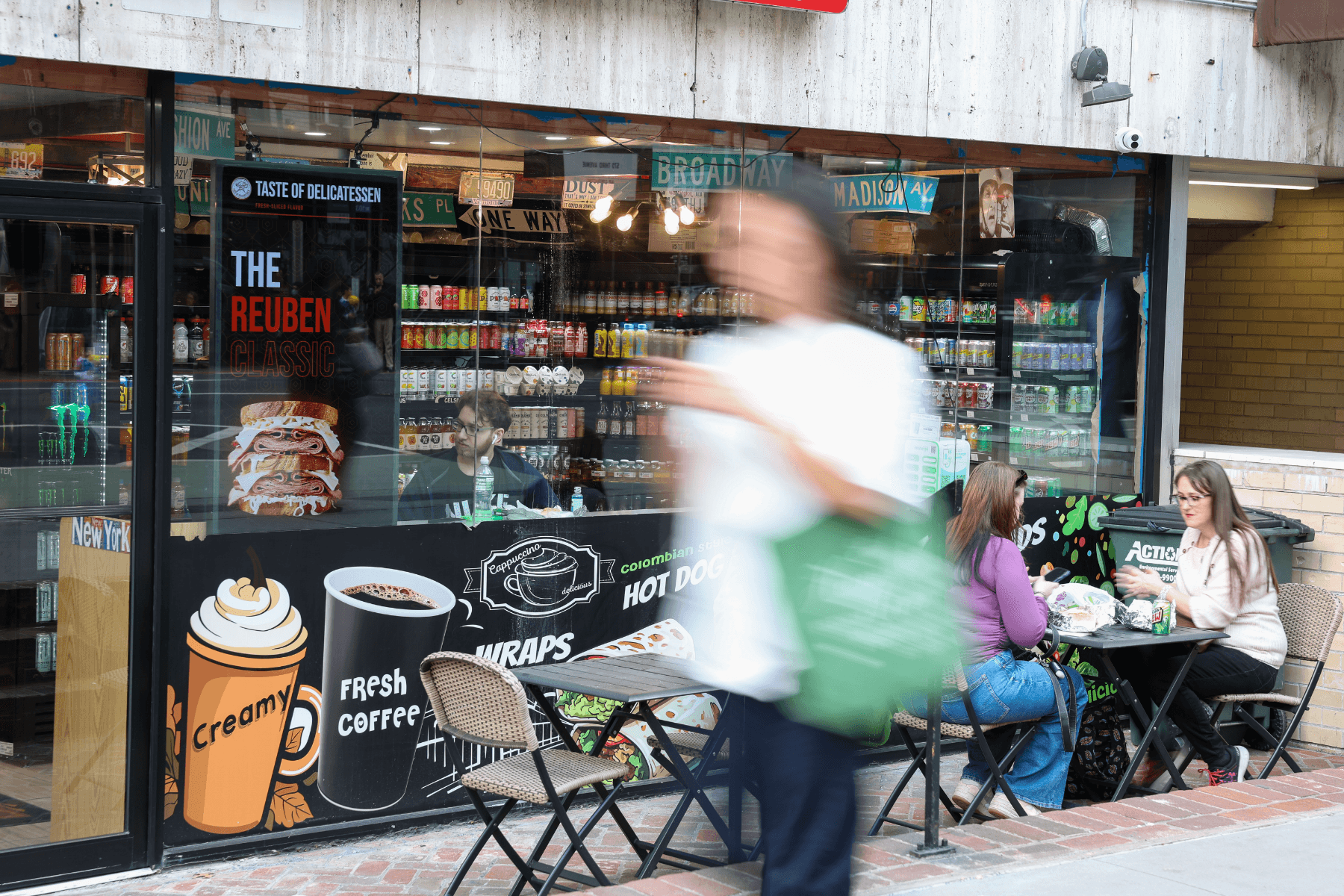
Retail Media's New Frontier: Why Physical Spaces Are Advertising's Most Valuable Real Estate
Retail media networks exploded online. Now the biggest growth opportunity is not on a product page — it is in the physical spaces where consumers already spend their time.
Read post→